

Sand’s Alive!
Photo Courtesy of National Park Service
The Movers and Shakers of Sandy Beaches
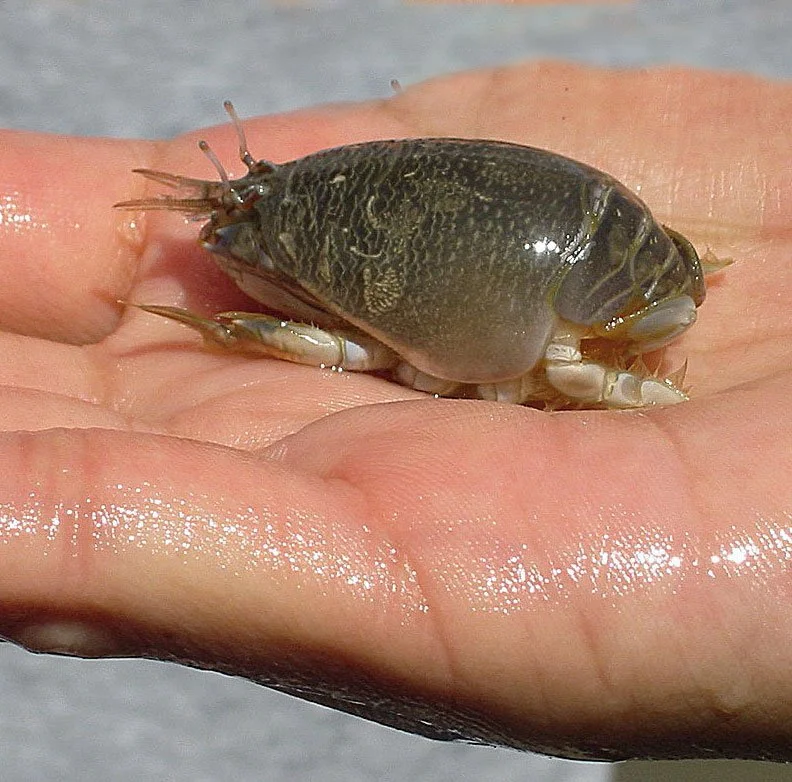
Photo Credit: LiMPETS Program: limpets.org
Sandy beaches aren’t just great for dramatic sunsets. They’re dynamic ecosystems that connect land and sea, protecting against coastal erosion, filtering water, providing food and serving as nurseries for plants, fish, reptiles, and birds. They harbor a hidden biodiversity of both marine and terrestrial organisms.
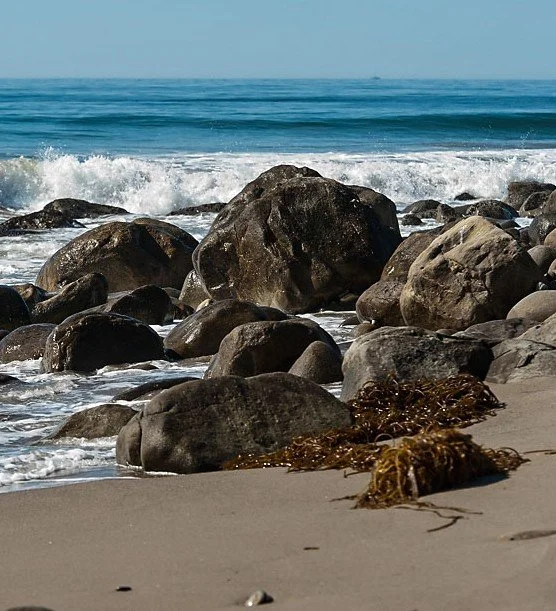
Nutrient-rich kelp wrack (lower right) is part of the beaches’ ecosystem. Photo courtesy of State Parks.
Looking closely at the high tide line in piles of seaweed and debris (referred to as wrack), where damp sand meets saturated sand, you might find an array of crustaceans such as beach hoppers (amphipods), beetles, and blood worms. These macroinvertebrates scurry, hop, and crawl up and down the beach daily, following the tides. Upper beaches also host sand dwellers such as isopods (roly-polies being one example), burrowing from the high tide line up to older wrack piles.
The Hidden World Beneath Your Feet
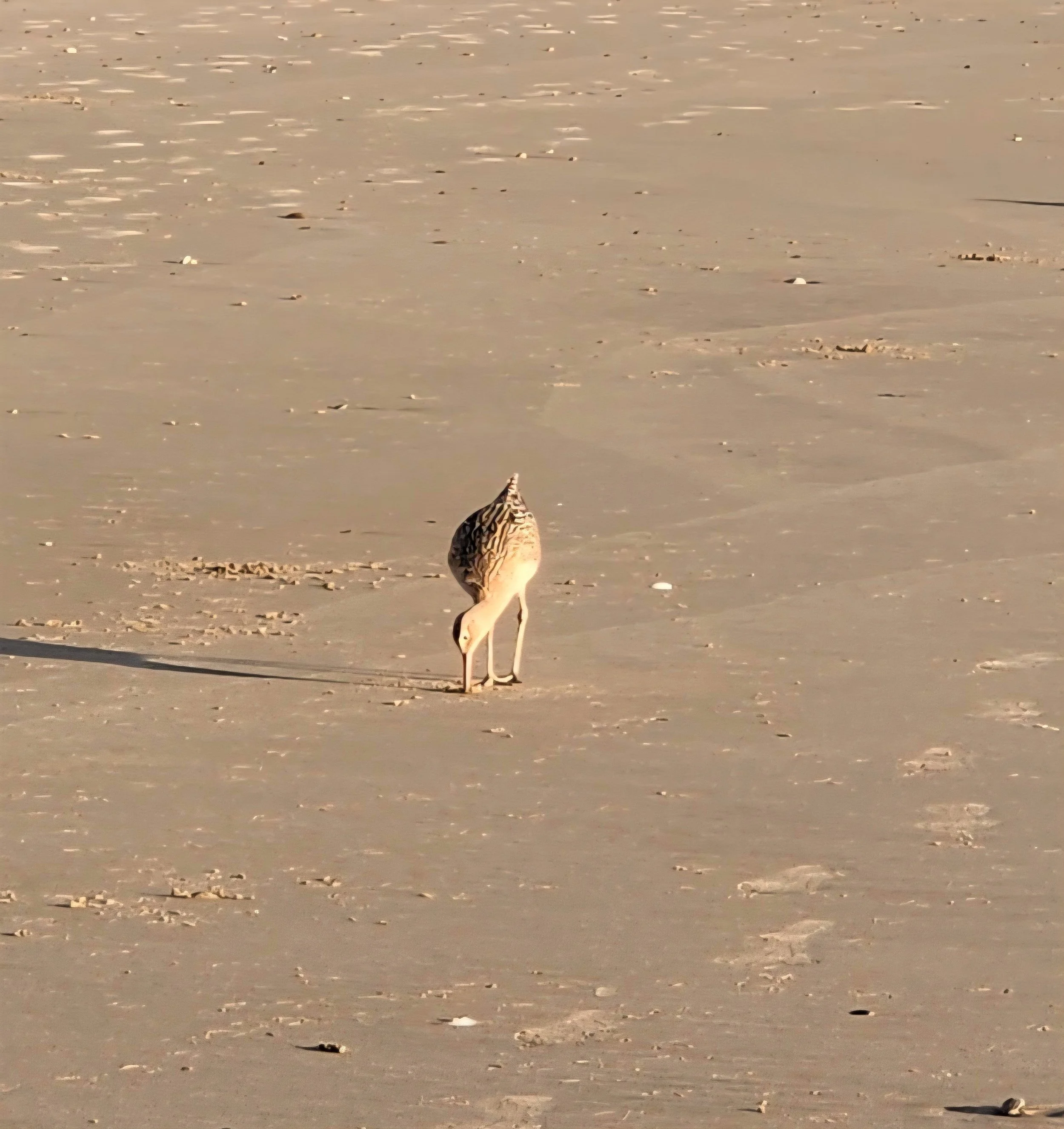
The migrating long bill curlews en route to their wintering grounds along the coast rely on insects, marine crustaceans, and bottom-dwelling marine invertebrates found at the shoreline.
At the shoreline you’ll also find sand dwellers such as pacific mole crabs (aka sand fleas) and bean clams that dig into the saturated sand. Sand crabs often gather in feeding groups in the swash zone, where waves wash up and down and also where sediment transport and coastal processes take place. The tiny holes or V-shaped ripples in the sand you might see are caused by wave wash flowing over the crab’s antennae. Shaped like small eggs and growing up to 1.5-inch long, these critters spend their lives following the tides in order to remain shallowly buried. Digging into the sand backwards, they can bury themselves completely in less than 1.5 seconds. Unlike most crabs, they have no claws and eat plankton caught in their antennae.
A Vital, Overlooked Ecosystem
Sandy beaches are often overlooked as a vital and biodiverse ecosystem that serves as a bridge between marine and terrestrial environments. They harbor high densities of detritus, infauna, and macro-invertebrates, organisms providing food and habitat for both marine and terrestrial species. They also play a role as a bioindicator for monitoring healthy, functioning ecosystems. For example, when crabs eat plankton contaminated with neurotoxins, they become toxic to the birds, otters, and fish that eat them. Scientists use them to assess the health of marine ecosystems.
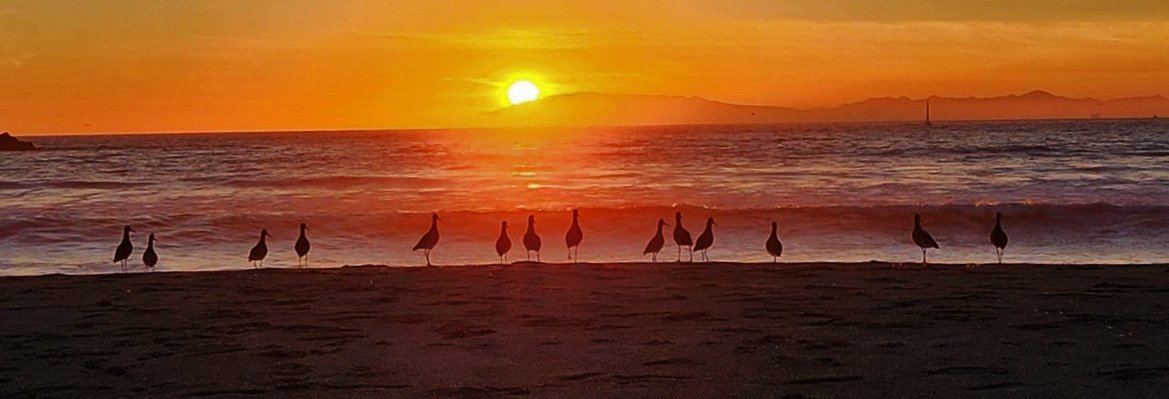
Sea gulls enjoying a dramatic sunset.