

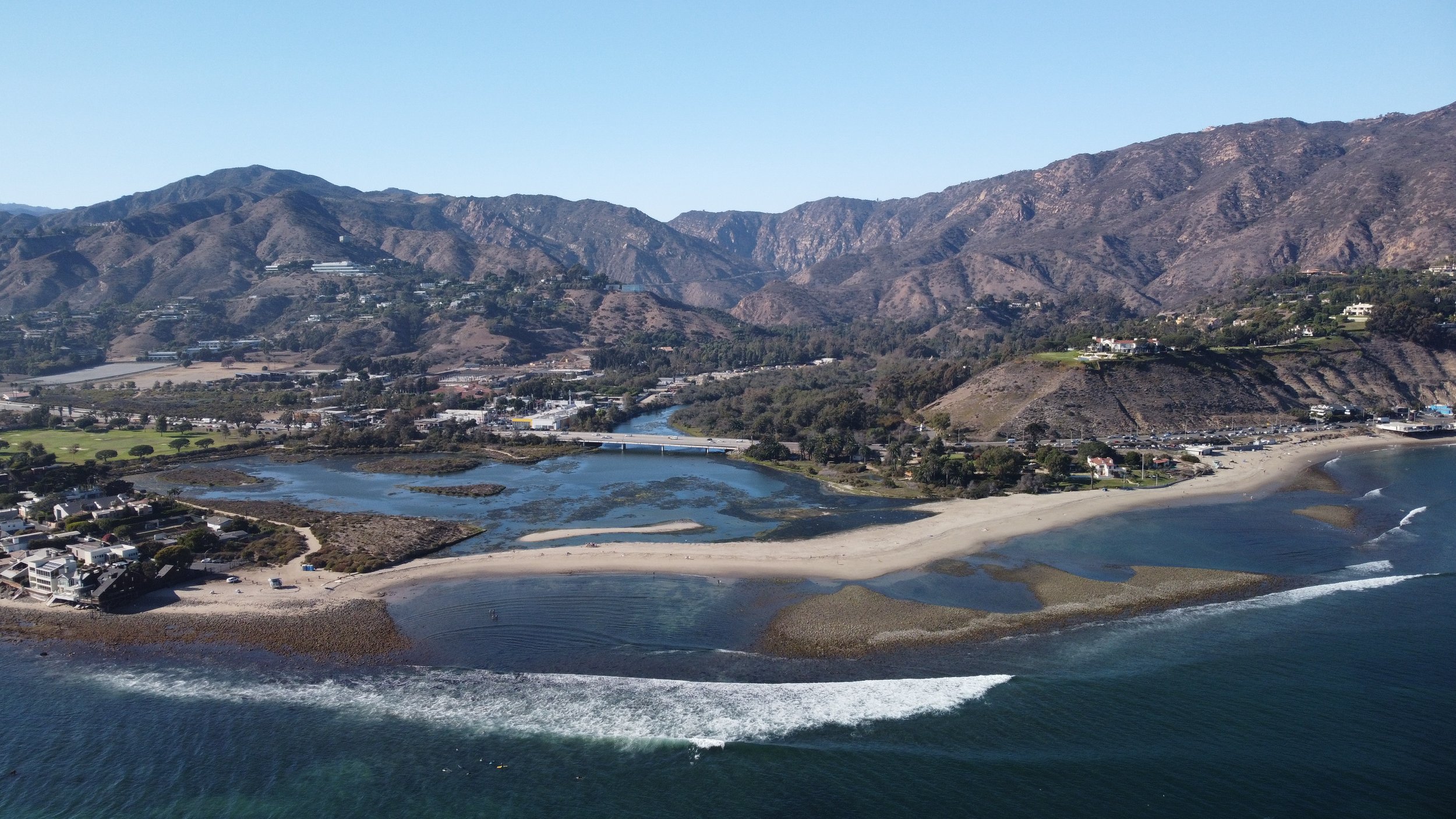
A California State Parks Summit-to-Seabed Ecological Restoration Project in Los Angeles County.


“California State Parks recognizes and acknowledges the first people of this ancestral and unceded territory of the communities of ta’lopop, that is now occupied by Malibu Creek State Park, and the capital village of humaliwo, now occupied by Malibu Lagoon State Beach. We honor the elders of the Pipimaram, mitsqanaqń and western Tovaangar lineages past and present, and their descendants who are citizens of the Fernandeño Tataviam Band of Mission Indians, the Barbareño Ventureño Band of Mission Indians, and the Gabrielino Tongva Indians of California. We recognize that these tribes are still here, and we are committed to lifting up their stories, culture and community.”

Restoring Malibu Creek
The Malibu Creek Ecosystem Restoration Project (MCERP) aims to restore natural processes and habitat connectivity, benefiting both biodiversity and human communities. For a century, the 100-foot-tall Rindge Dam has blocked the Malibu Creek Watershed. Rindge Dam disrupts the migration of aquatic and terrestrial species, including those that are threatened and endangered, and has changed creek ecosystem functions. The California Department of Parks and Recreation (State Parks) is leading the effort to remove the dam and restore the Malibu Creek Watershed's natural resilience.

Resupplying Malibu’s World-Class Beaches
The obsolete Rindge Dam is filled with approximately 780,000 cubic yards of sediment - sediment that would have naturally flowed downstream to our coastline but instead is trapped behind the dam. The MCERP will take the trapped sediment and place it where it belongs, on local beaches and the coastline to improve coastal resiliency and public recreation.

Returning Endangered Species Back to their Ancestral Waters
The MCERP will remove Rindge Dam and other barriers to reconnect 15 miles of critical aquatic habitat for the endangered Southern Steelhead. This project supports California’s 30x30 goal. We have a once in a lifetime opportunity for large-scale ecological restoration in an urban watershed.
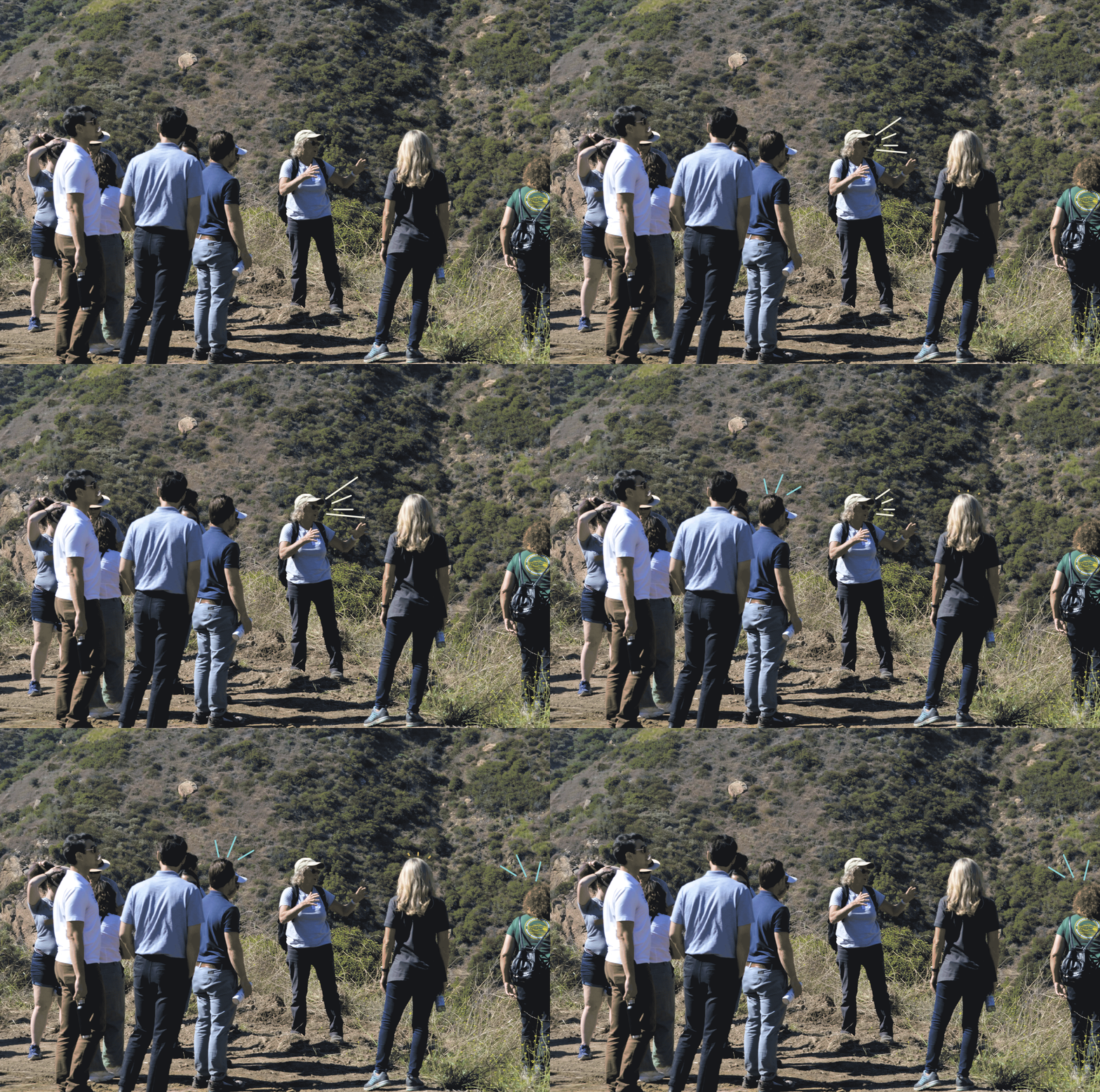
Reconnecting People with Natural Places
Reconnecting People with Natural Places
This area was the center of Chumash and Western Tongva Native American life for centuries. This project represents a small step to restore cultural lifeways for tribal communities. Following the hiking trails along upper Malibu Creek, visitors may be able to once again see southern California steelhead swimming in their home waters.
