

Small Fish, Big Impact: Meet the Tidewater Goby
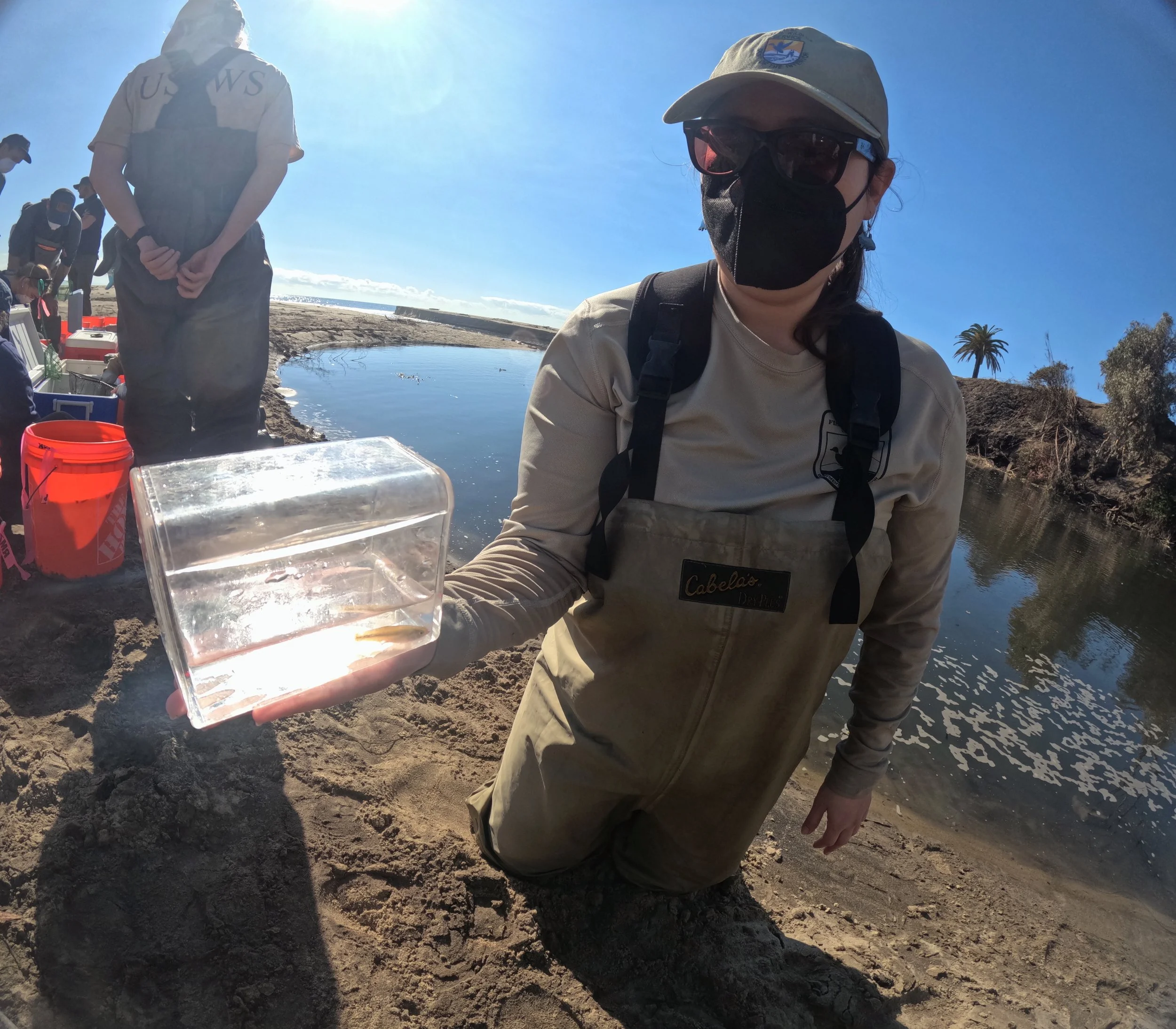
The tidewater goby rescue effort in Topanga Lagoon in January 2025. Participating agencies included the Resource Conservation District of the Santa Monica Mountains, in collaboration with US Fish and Wildlife Service and Dr. Brenton Spies. (Photo credit: Bernard Yin)
You may have first heard about tidewater gobies (Eucyclogobius newberryi) when they made headlines during a remarkable rescue effort in January 2025. Biologists saved nearly 760 fish from Topanga Lagoons before the post‑wildfire heavy rains threatened to wipe out the last remaining local populations.
Tiny fish, big question: what exactly is a tidewater goby??
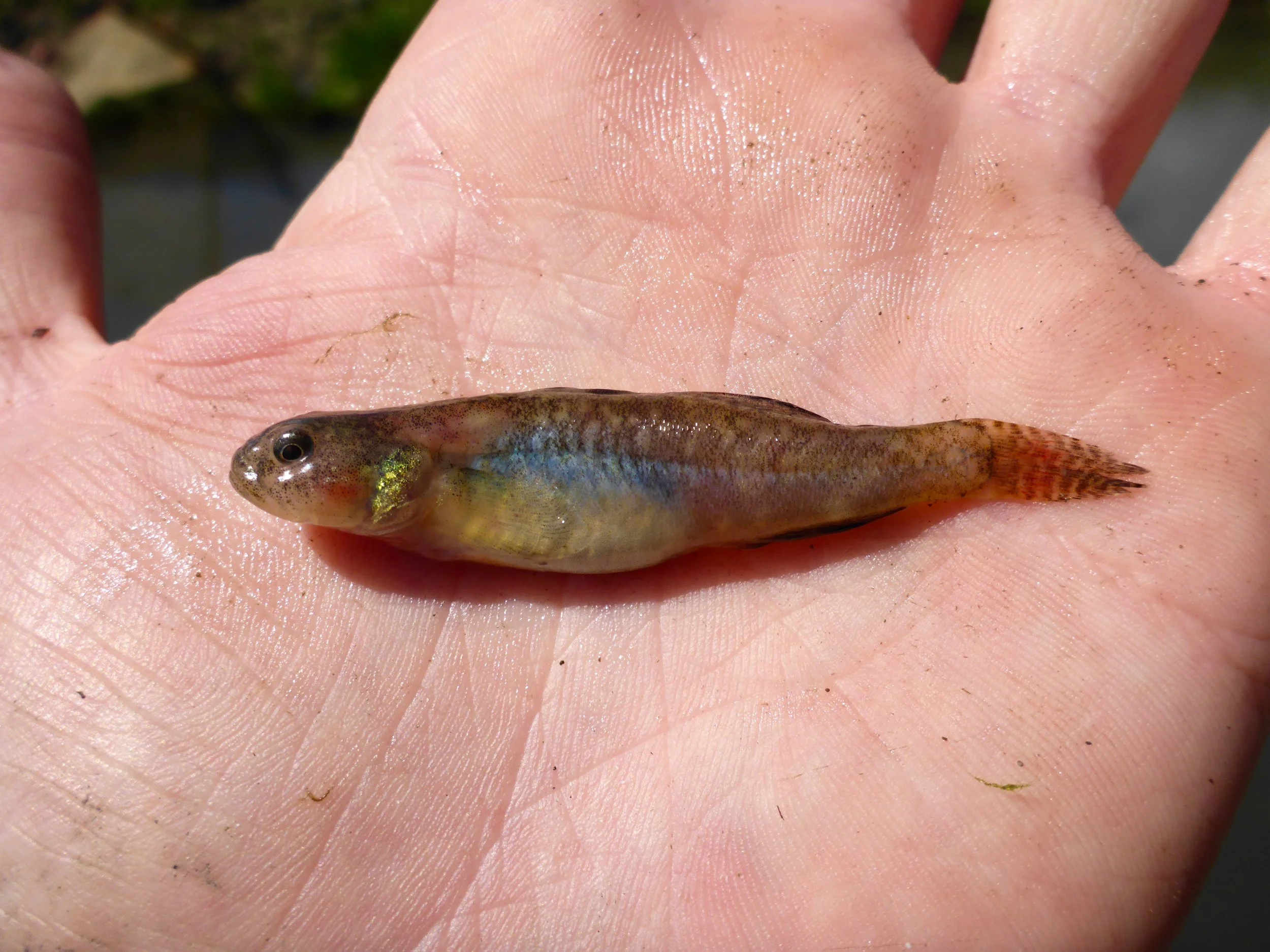
This tidewater goby measures 62mm long, which is larger than most. Photo credit: Dr. Brenton Spies
Measuring just about two inches long, plainly colored and living less than a year, tidewater gobies are easy to overlook. In Southern California, they inhabit brackish lagoons, estuaries, and marshes along the coast. Gobies have likely swum in these waters for thousands of years, but loss of habitat, drought and introduction of non-native predators have taken a toll on them; they were added to the endangered species list in 1994.
Locally, the remaining gobies are mostly found in Topanga Lagoon and Zuma Creek. Survey efforts can be inconsistent; for example, a few gobies are periodically found in Malibu Lagoon, but usually after a breach, leading researchers to believe they might have washed in from Topanga Canyon. Also, a related native species, the long-jawed mudsucker (G. Mirabilis), are abundant in Malibu Lagoon. The juveniles look almost identical to tidewater gobies, but this fish grows up to 8 inches in length.
According to Brenton Spies, PhD, Associate Teaching Professor of Environmental Science & Resource Management at CSU Channel Islands, despite their unassuming appearance, tidewater gobies play a vital role in coastal ecosystems. Spies—nicknamed the “goby guy” -- specializes in goby research, studying how they can handle extreme changes in salinity, temperature and oxygen levels. These conditions are typical in spots where fresh water of streams meets ocean saltwater.
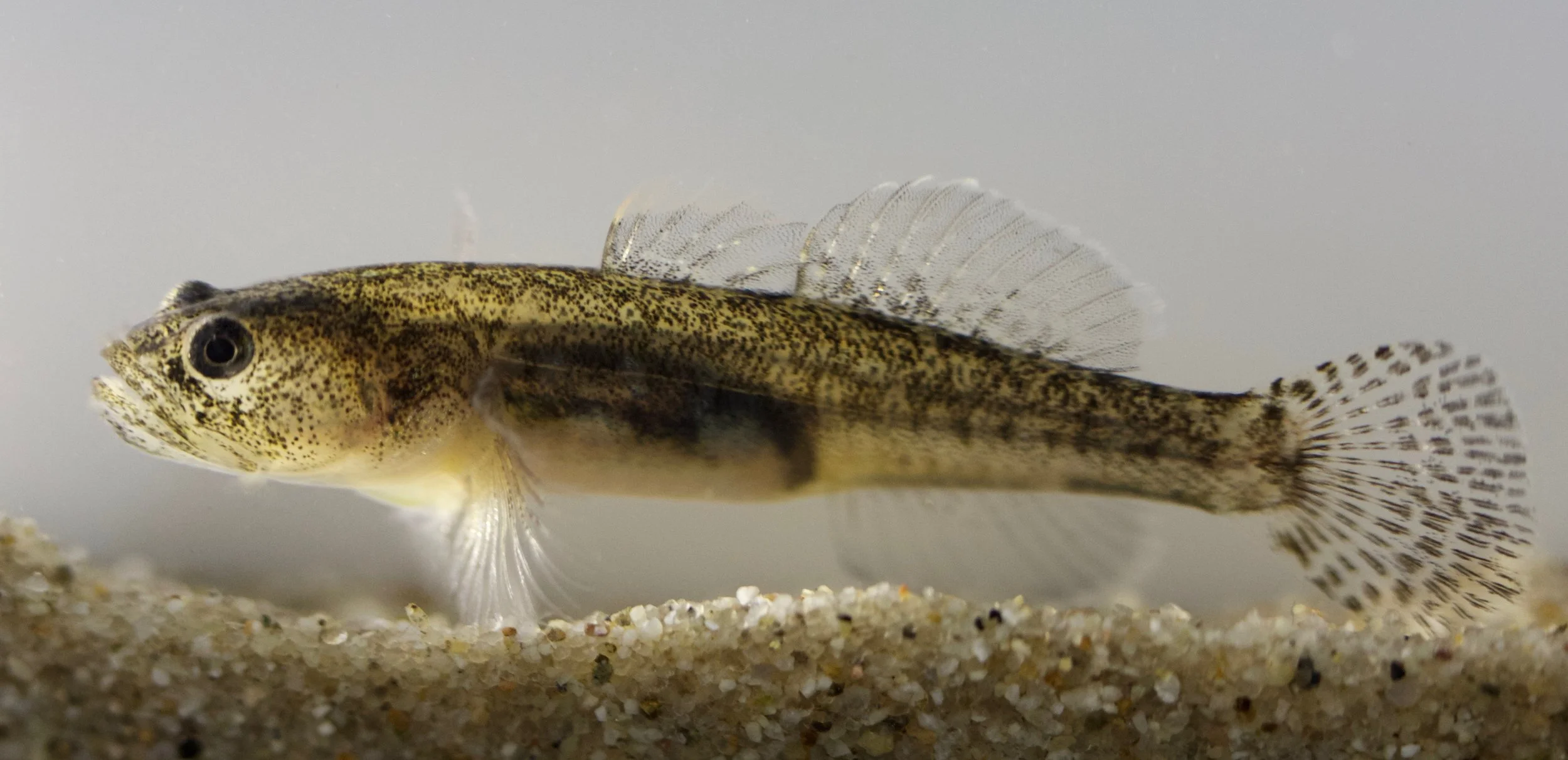
Tidewater Goby/ Photo Credit: Dr. Brenton Spies
Spies finds that gobies serve as a critical link in overall environmental health. “Tidewater gobies may be small, but they play an outsized role in our coastal lagoons. Most people have never heard of them, yet they’re the only native fish that are truly adapted to these dynamic estuarine systems. When gobies are doing well, it’s often a sign the lagoon itself is healthy, making them an important indicator of the resilience and ecological balance of Malibu’s coastal ecosystems,” he said.
That resilience for handling extreme changes in salinity, temperature and oxygen levels was put to the test in last year’s rescue from Topanga Creek. The group of small yet mighty fish adapted and grew at their temporary homes in local aquariums. They were released back into the lagoons by June. Spies helped lead the successful rescue. “Tidewater gobies have become a major conservation success story and are helping to guide how we restore and protect coastal wetlands across the state,” he said.
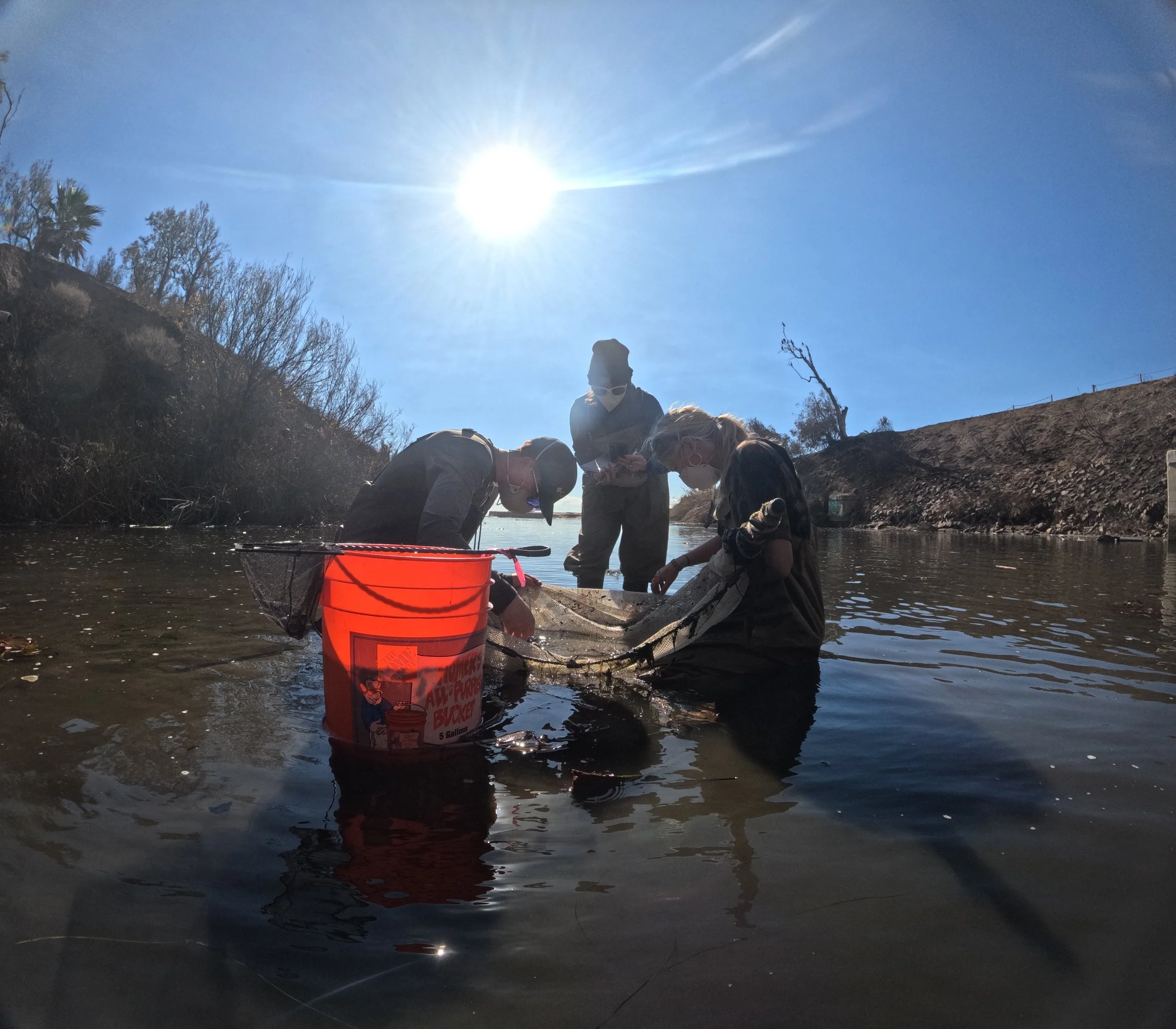
The rescue team captured 760 tidewater gobies. Photo credit: Bernard Yin
Adding to their uniqueness, male tidewater gobies are devoted parents. Males build small burrows in the sand where females lay their eggs and then fiercely guard the nests until the young hatch. “For a fish barely bigger than your finger, they take parenting very seriously,” said Spies.
Small, resilient, and essential, tidewater gobies remind us that even the most modest species can play an outsized role in the health of our coastline ecosystems. Spies emphasizes, “they’re incredibly important. Tidewater gobies help hold the entire food web together.”
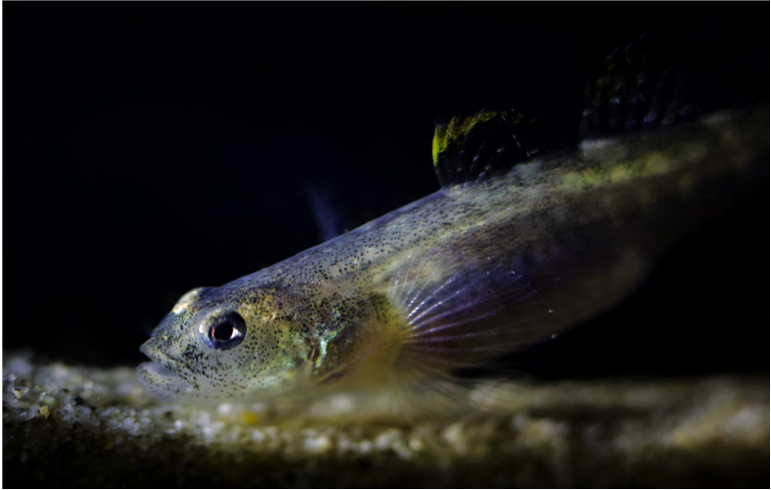
Photo Credit: Dr. Brenton Spies