

Restoring Nature’s Flow
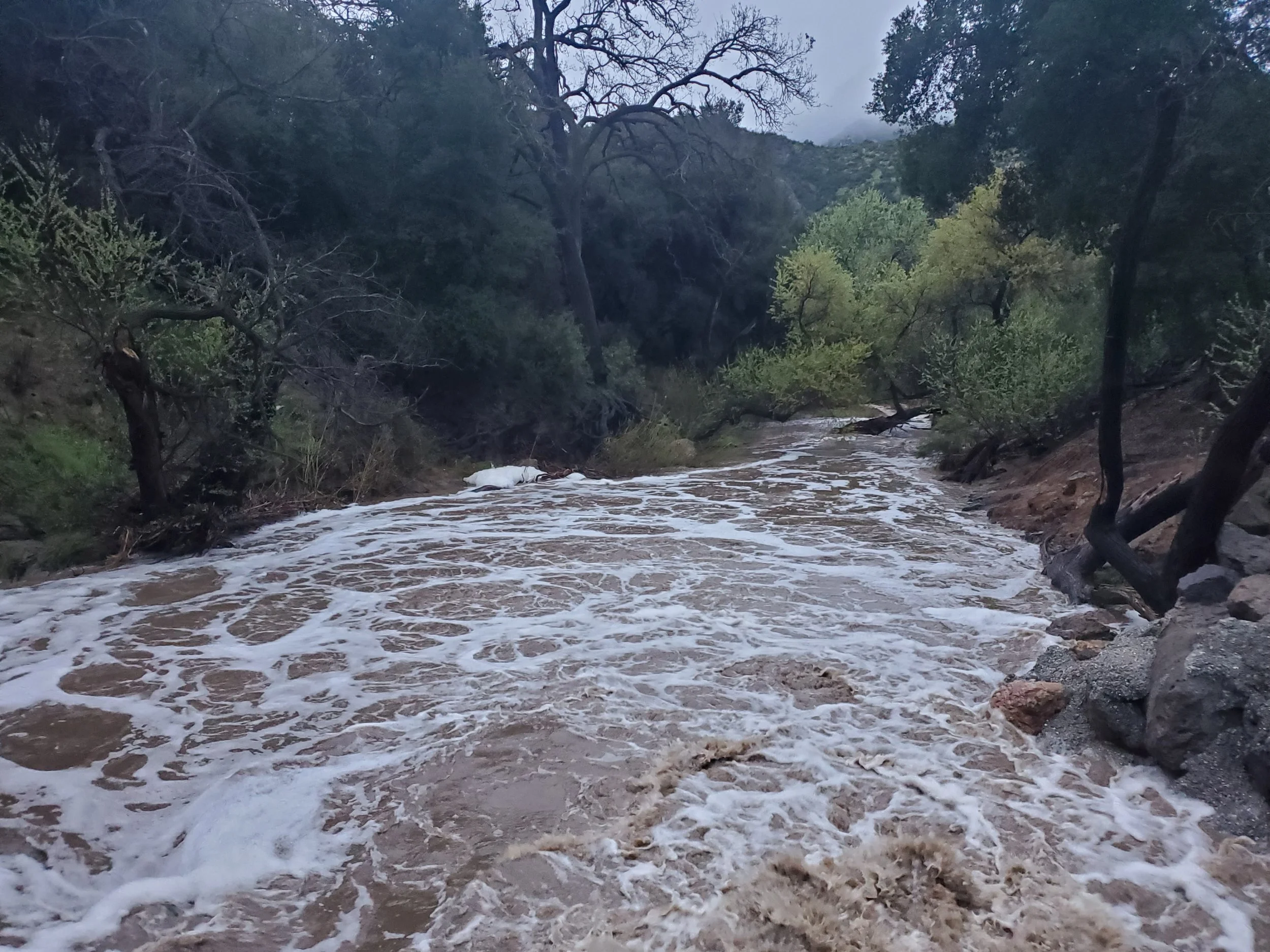
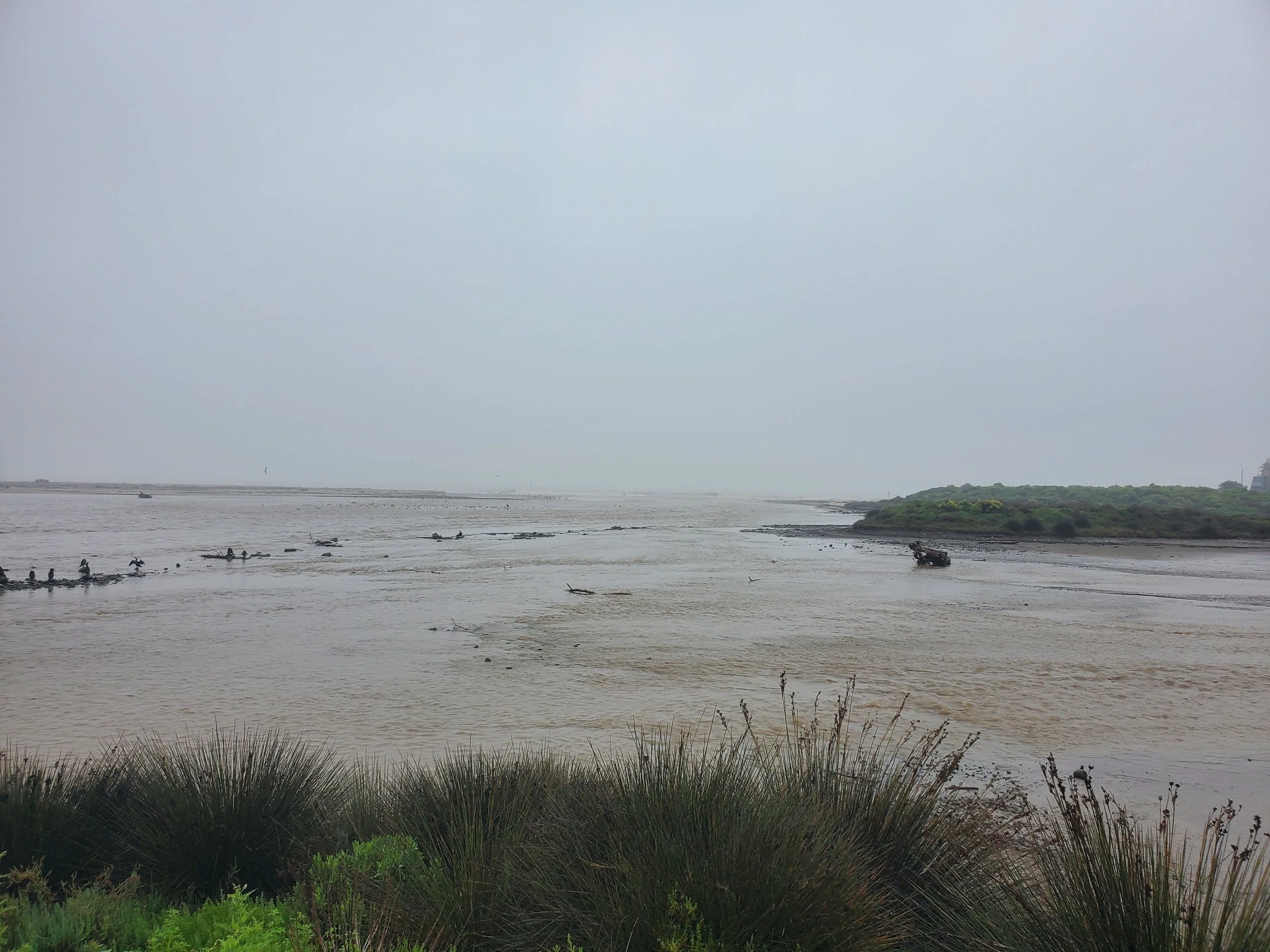
For centuries, Malibu Creek has carried the sand that builds our shores and protects our coast. But for 100 years, Rindge Dam has blocked that natural flow. The Malibu Creek Ecosystem Restoration Project is working to reconnect mountains to the sea, restore healthy beaches, and strengthen our coastal resilience. Photo credit: RJ Van Sant, CA State Parks.
The Sedimental Journey
Stand on any streambank in Southern California after a rainstorm and you will see a river come to life. Not just with the rush of water, but also the torrent of sediment. Southern California rivers and coasts experience continuous movement of sand, gravel, cobble, and even boulders throughout the year. The movement of this sediment depends on the region’s geography, weather, tides, and waves. Quintessential components of Southern California.
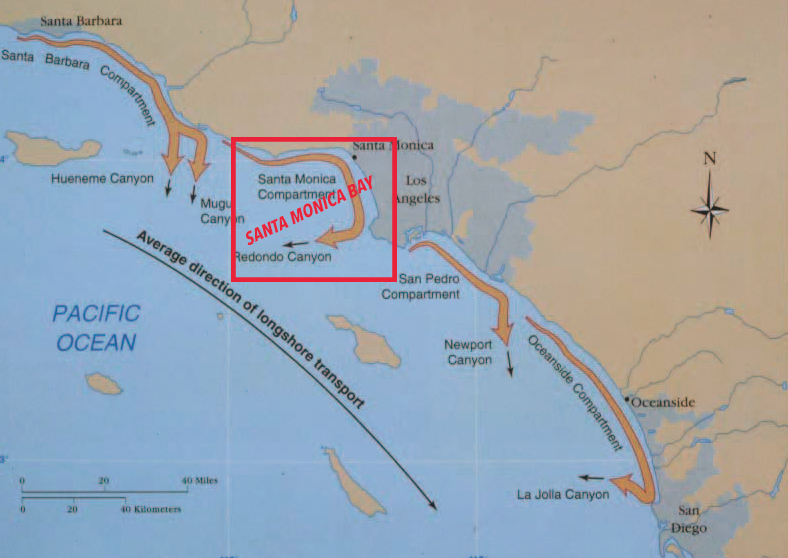
The littoral cells (beach compartments) along Southern California’s coast. Each cell has its own source(s) of sand. Malibu Creek is among the key waterways feeding Santa Monica Bay. Photo credit: Patsch & Griggs, October 2006
The Santa Monica Bay is also known as the Santa Monica Littoral Cell. This name describes the natural forces that act on the coastal mountains and Santa Monica Bay to drive how sediment moves along the coast. Malibu Creek sits at the heart of this system. For Malibu Creek and other streams along the Santa Monica Mountains, material enters the ocean at the estuary. Waves from the predominately from the west push sediment east down the shoreline toward Los Angeles. The coast’s shape changes based on the pace of sediment movement. The westside of the Santa Moncia Bay typically has narrower beaches indicating faster sediment movement. Farther east, near Pacific Palisades and beyond, beaches widen as sand slows. These differences in beach width reveal how geography shapes the rhythm of our coastal system.
Replenishing Our Beaches
Malibu Creek plays a key role in feeding sediment to the bay. Studies show its outflow is one of the bay’s main sediment sources. During storms, Malibu creek sends a pulse of material to Santa Monica Bay. These sediments influence nearshore conditions and sculpt the seafloor. They shape the underwater landscape, build iconic surf breaks, and provide habitat for native marine life. Malibu Creek connects mountains to the bay. But not completely.
For one hundred years, Rindge Dam has disrupted the movement of sediment. Locked behind Rindge Dam is decades of coast. Removing Rindge Dam will restore a more natural flow of sediment to Santa Monica Bay. Dams along with channelization, river course simplification, and coastal armoring have reduced what our local rivers once supplied.
Today, most beach sand comes from artificial nourishment projects. These efforts have added millions of cubic meters of sand. This human input keeps beaches wide, usable, and mostly stable year-round. The Malibu Creek Ecosystem Restoration Project will prioritize beneficial reuse of the sediment locked behind Rindge Dam. More importantly we will allow nature, once again, to move sand and gravel from mountains to sea. Restoring this flow is essential for healthy beaches, thriving ecosystems, and a resilient Southern California coast.
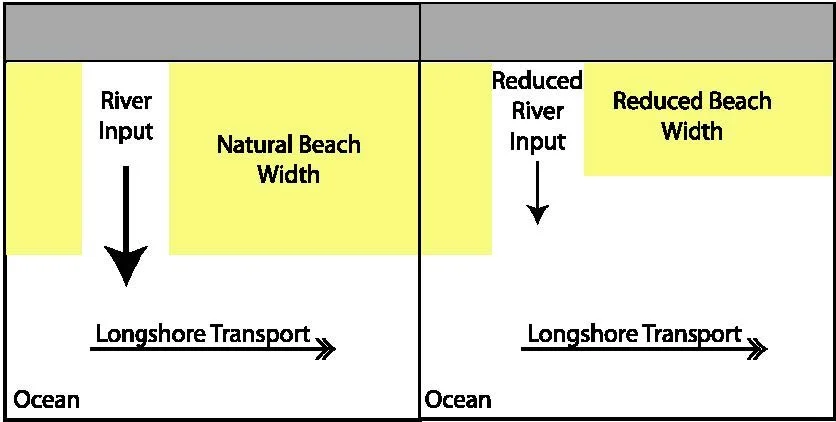
Beach sand moves on and offshore seasonally in response to changing wave energy, and also moves alongshore, driven by waves. Dams such as Rindge Dam traps the sediment and disrupts the natural flow of sediment to the beach.
Photo credit: Patsch & Griggs, October 2006